

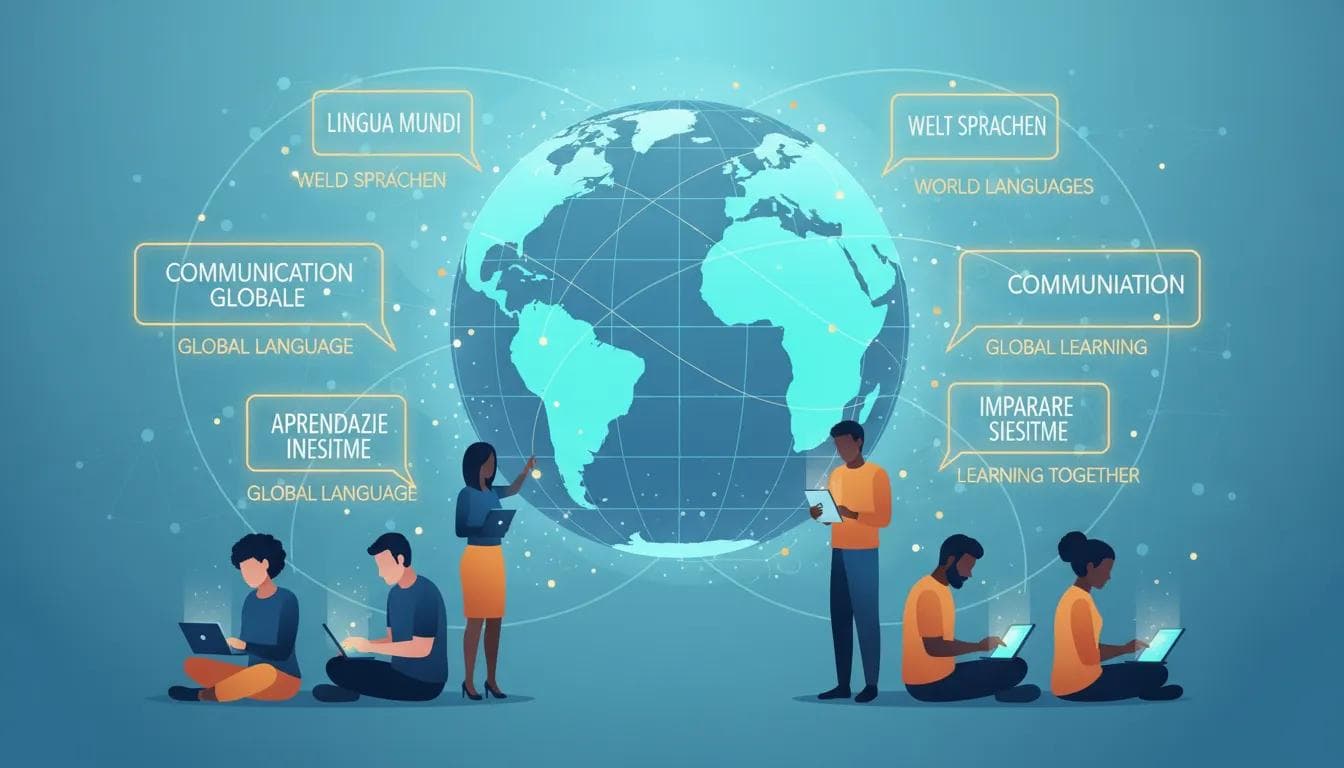
Multilingual Training: Best Practices for Global Teams
Learn the essential strategies for creating effective multilingual training programs that engage learners across cultures and languages.
 Nico Schriever•
In today's global business environment, multilingual training isn't just a nice-to-have—it's essential. Organizations with international teams need to ensure that every employee, regardless of their native language, has access to the same high-quality training materials.
Why Multilingual Training Matters
Studies consistently show that learners retain information better when training is delivered in their native language. According to research by the eLearning Industry, learners are 75% more likely to complete training when it's available in their preferred language.
Beyond completion rates, multilingual training demonstrates organizational commitment to inclusion and equity. When employees can learn in their native language, they feel valued and are more likely to engage deeply with the material.
Common Challenges
Creating multilingual training content traditionally comes with significant hurdles:
1. Cost and Time
Traditional translation can cost anywhere from $0.10 to $0.30 per word. For a 10,000-word training module translated into 10 languages, you're looking at $10,000-$30,000 in translation costs alone—not including the time delay of weeks or months.
2. Quality Control
Ensuring consistency and accuracy across multiple languages is challenging. Technical terminology, brand voice, and instructional clarity must remain intact across all translations.
3. Maintenance Burden
When you need to update training content, every translation must be updated as well. This creates a maintenance nightmare that many organizations struggle to manage.
4. Cultural Adaptation
True localization goes beyond word-for-word translation. Content must be culturally appropriate, using examples and references that resonate with learners from different backgrounds.
Best Practices for Success
Start with Clear, Simple Source Content
The quality of your translations depends heavily on the quality of your source material. Write clearly and concisely, avoiding idioms, cultural references, and overly complex sentence structures that may not translate well.
Use Visual Elements Wisely
Images and graphics can transcend language barriers, but be mindful of cultural sensitivities. Avoid imagery that may be interpreted differently across cultures.
Leverage Technology
Modern AI-powered translation tools have reached a level of sophistication that makes them viable for training content. They can:
- Translate content in minutes instead of weeks
- Maintain consistency across all translations
- Learn your organization's terminology and style
- Update all language versions simultaneously when content changes
Test with Native Speakers
Even with excellent translation technology, having native speakers review content ensures cultural appropriateness and catches nuances that automated systems might miss.
Consider Regional Variations
Remember that Spanish in Spain differs from Spanish in Mexico, and French in France differs from French in Canada. Consider which regional variants are most relevant for your audience.
The Modern Approach
Today's AI-powered platforms are changing the multilingual training game completely. Organizations can now:
- Create Once, Deploy Everywhere: Build training content in one language and automatically generate high-quality translations in over 160 languages.
- Instant Updates: Make changes to source content and have those updates automatically propagate to all language versions.
- Cost-Effective Scaling: Expand your training to new languages without exponential cost increases.
- Maintain Consistency: AI ensures that terminology and style remain consistent across all language versions.
Measuring Success
Track these key metrics to evaluate your multilingual training program:
- Completion rates by language: Are all language versions seeing similar engagement?
- Assessment scores: Do learners in all languages achieve similar learning outcomes?
- Time to completion: Does the training flow equally well in all languages?
- Learner feedback: Collect specific feedback about language quality and cultural relevance.
Real-World Success Stories
Companies implementing effective multilingual training strategies report:
- 40% increase in global training completion rates
- 60% reduction in time-to-market for new training
- 85% cost savings compared to traditional translation
- Improved employee satisfaction and engagement scores
Looking Forward
The future of multilingual training is bright. As AI translation technology continues to improve, the gap between human and machine translation narrows further. Organizations that embrace these tools now position themselves for success in an increasingly global marketplace.
The key is to view multilingual training not as a burden, but as an opportunity to build a more inclusive, engaged, and effective workforce across all your locations worldwide.
Getting Started
If you're ready to scale your training globally:
- Audit your current content: Identify which training materials would benefit most from multilingual versions.
- Prioritize languages: Start with the languages that serve the most employees.
- Choose the right tools: Look for platforms that combine translation quality with ease of use.
- Pilot and iterate: Start small, gather feedback, and expand gradually.
The technology to create world-class multilingual training is available today. The question is: how quickly can you leverage it to serve your global team better?